
Tuesday, March 17, 2026 (Video recording below)
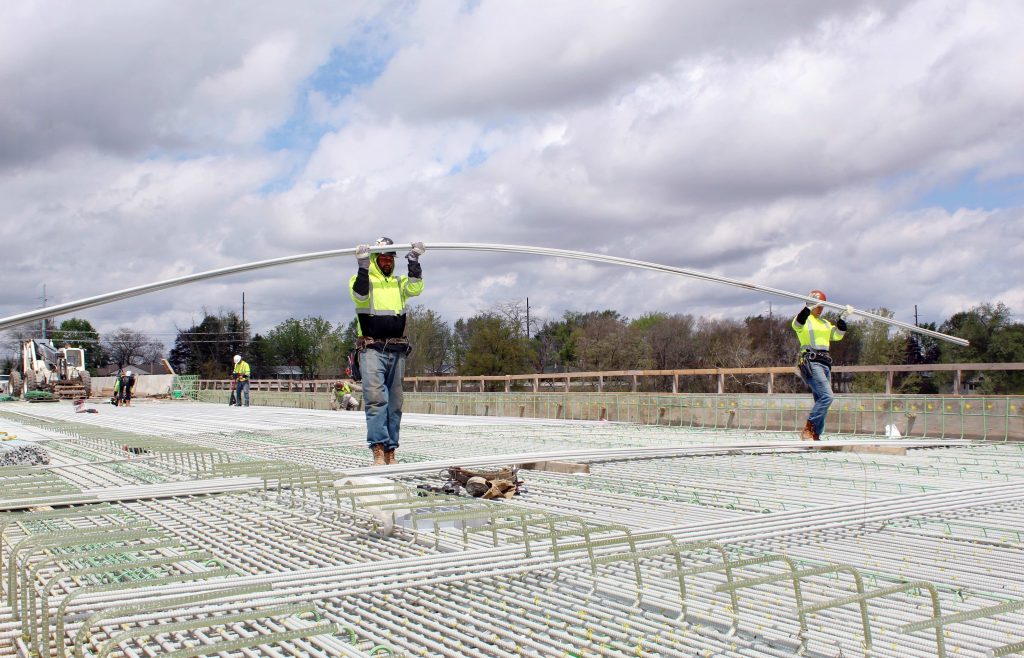
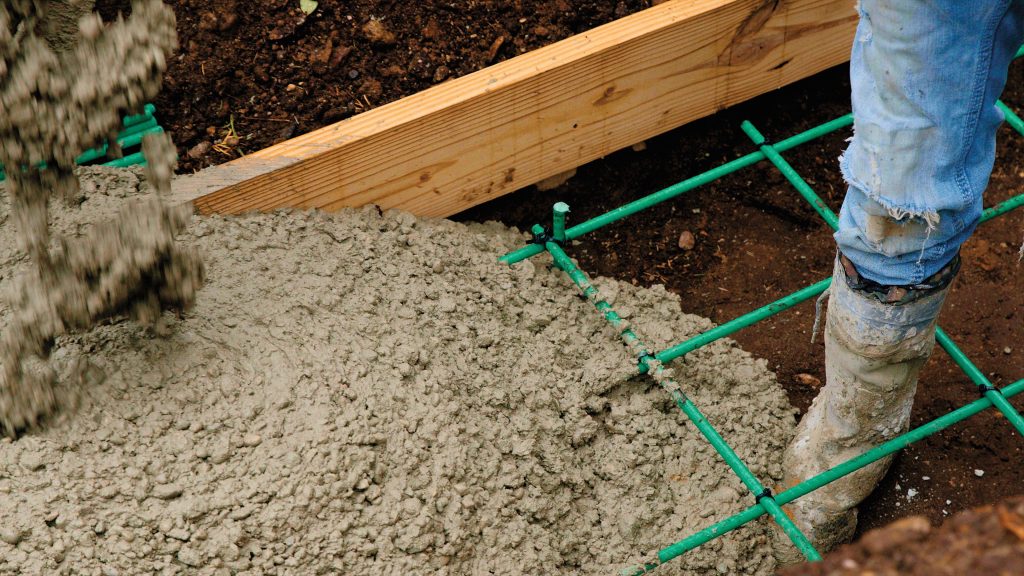
Design engineers today have an ever-increasing array of mild reinforcing options at their fingertips. The industry is undergoing a transformation driven by a desire for performance improvement that will ultimately be facilitated by quality corrosion-resistant innovations. The presenter’s unique perspectives from over two decades in the reinforcing industry will guide the presentation through currently available options for both steel and glass fiber reinforced polymer (GFRP) reinforcing bars.
First, the state of practice for steel reinforcing bars will be summarized along with available industry resources. Second, the development of codes and specifications for GFRP reinforcing bars is progressing at a rapid pace, allowing for increased use and adoption across the US and globally. This paradigm shift will be highlighted with current industry efforts for improving constructability and sustainability. Finally, a summary of the material property and structural design differences to consider will be stressed
Watch the technical presentation recording:
About our Presenter:
Danielle Kleinhans, Ph.D., P.E, F.ACI – Director of Engineering and Business Development, Mateenbar Composite Reinforcements

Danielle Kleinhans is Director of Engineering and Business Development for Mateenbar. She has over 20 years’ experience in structural engineering and association leadership. Most recently she worked for the Concrete Reinforcing Steel Institute (CRSI) for more than a decade and ultimately as President/CEO. She also worked for CTLGroup and Modjeski and Masters, Inc. as a structural engineer. Kleinhans earned a BS in civil engineering from the University of Alaska-Fairbanks, and an MS and PhD in civil engineering from the University of Missouri-Rolla. She serves on numerous industry committees related to reinforced concrete construction, is a licensed professional engineer and a fellow of the American Concrete Institute.
Questions & Answers after the presentation
Here is a summary of what was covered in the Q&A portion:
- GFRP Rebar Bending
- 90° bends are feasible.
- Bending is only possible in the uncured state for tight radii.
- Z-shapes are not feasible due to lack of stiffness in the pultrusion process; bars cannot fold back onto themselves.
- Field bending for short radii is not possible; long-radius bending (e.g., curved sidewalks) is achievable.
- Fire Rating of GFRP Rebar
- Limited to non-fire-rated applications per ACI 440.
- ACI 440 is referenced in the 2024 IBC and IRC.
- Implications for concrete cover in fire-rated assemblies require further consideration when substituting GFRP for steel.
- Use of GFRP in Bridges (e.g., California / Caltrans Context)
- Linear elastic behavior limits displacement capacity.
- Not suitable for seismic-critical members (e.g., shear keys, plastic hinges, other SCMs).
- Hybrid reinforcement systems may be a viable future approach.
- Lap Splices and Development Length
- Preliminary estimate: lap splice ≈ 50 d_b.
- Increased lap splice lengths required due to higher tensile strength.
- Full development length is longer compared to steel reinforcement.
- Typically designed to work within ~20% of ultimate strength.
- Development based on force in bar with appropriate factor of safety.
- GFRP Bar Length Limitations
- Current practical limit ~40 ft due to manufacturing table lengths.
- Longer lengths are feasible; target is ~60 ft to align with typical steel bar lengths.
- Value Engineering / Design Support
- Limited support available; emphasis on guiding designers through implementation.
- Engineer of Record (EOR) retains full design responsibility.
- Conversion from steel to GFRP is not a simple substitution.
- Recycling / Removal from Existing Decks
- No established methods currently for extracting and recycling GFRP bars.
- Water jetting may be used to remove surrounding concrete.
- Conventional breaker methods used for steel rebar recovery are not recommended.
- Use in High Seismic Zones
- Low ductility is a limiting factor.
- Potential solutions include hybrid reinforcement systems or methods to enhance ductility.